← Back to Projects
Healthcare Portal

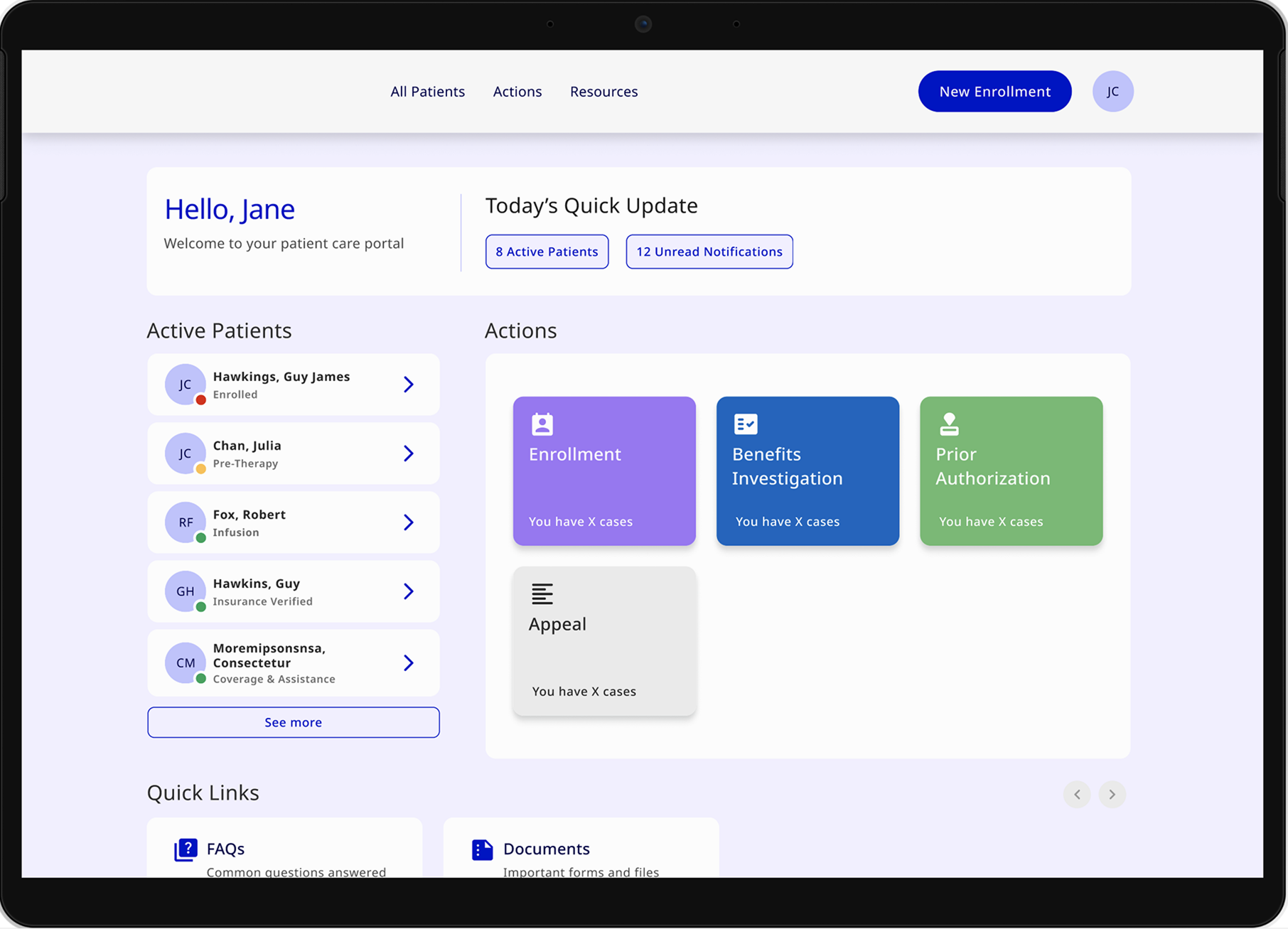
Pfizer Patient and Healthcare providers Portal

Designed a comprehensive support portal for patients and healthcare professionals navigating the hemophilia gene therapy journey. The portal will assist users with enrollment, insurance assistance, receiving gene therapy, post-treatment care, and patient referrals.

Role Product designer, UI/UX Designer, User Testing
Tools Figma, FigJam, Miro, Trello, Jira
Pfizer Patient Portal Design

The Challenge

Pfizer needed a dedicated portal to support patients undergoing gene therapy, a complex treatment journey with multiple touchpoints, stakeholders, and emotional challenges. No existing solution adequately addressed these unique needs.

  • Patients felt overwhelmed by complex medical information and lacked a centralized resource
  • No unified platform existed to guide patients through the entire treatment journey
  • Healthcare providers needed efficient tools to manage patient referrals and coordination
  • Insurance assistance processes were fragmented and confusing for patients
  • Caregivers had no dedicated support or access to patient information

"By creating a unified, patient centered portal that guides users through each stage of their gene therapy journey with clear information, accessible design, and streamlined insurance assistance, we can reduce patient anxiety, improve treatment adherence, and enhance coordination between patients, caregivers, and healthcare providers."

Key Assumptions

  • A centralized platform will reduce patient confusion and anxiety during treatment
  • Simplified insurance assistance will improve enrollment completion rates
  • Clear milestone tracking will help patients feel more in control of their journey
  • Caregiver access features will improve support and treatment outcomes
  • Healthcare providers will adopt the portal if it streamlines their referral workflow

Research

I conducted comprehensive research to understand the needs of all stakeholders involved in the gene therapy journey:

Patients

Patients currently undergoing or considering gene therapy

Healthcare Professionals

Healthcare professionals involved in hemophilia treatment

Administrative Staff

Insurance coordinators and administrative staff

Our research revealed several critical insights that shaped the design direction:

  • Patients often feel overwhelmed by the complexity of the treatment journey and lack of clear information
  • Healthcare professionals need efficient tools for managing patient information and coordinating care
  • Insurance assistance is a major pain point, with many patients struggling to navigate the claims process
78%

of patients prioritized simple navigation

65%

required strong accessibility features

88%

expected mobile-friendly access

To inform our new portal design, we analyzed existing support portals and tools in the healthcare sector, focusing on:

User Experience & Interface

Evaluating navigation patterns, visual design, and overall usability of competitor portals

Enrollment & Insurance

Features related to enrollment, insurance assistance, and post-treatment support

Educational Resources

Integration of educational resources and support services for patients and caregivers

Accessibility Standards

WCAG compliance and inclusive design practices across healthcare platforms

Define the User Journey

We mapped out the entire gene therapy journey, identifying key touchpoints:

01

Enrollment

Initial sign-up and documentation

02

Insurance Assistance

Verification, claims, and support

03

Receiving Gene Therapy

Scheduling, preparation, and administration

04

After Treatment

Monitoring, follow-up care, and support

05

Referring a Patient

Process for healthcare professionals to refer new patients

Information Architecture

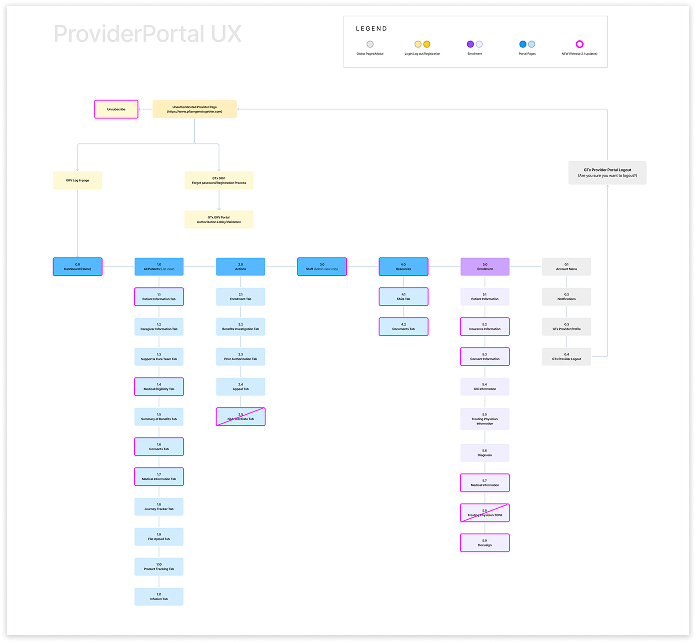
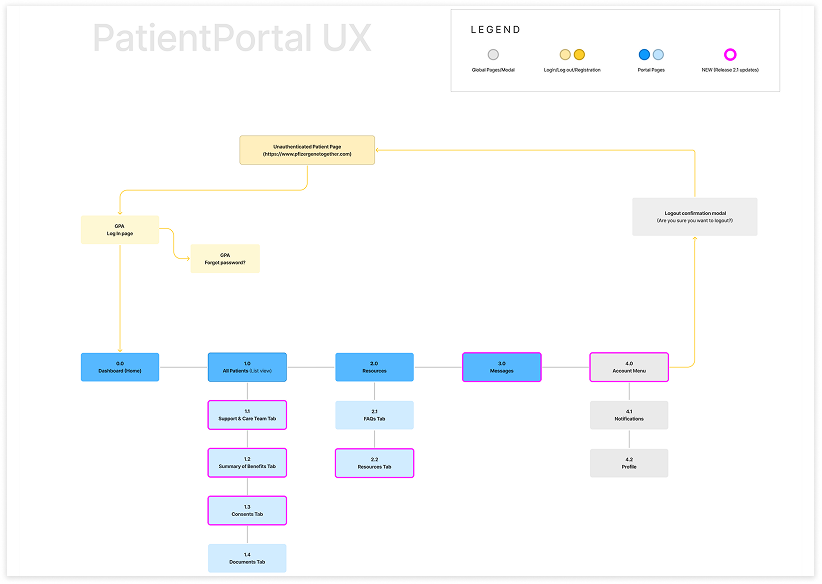
Based on our research findings, we designed the portal's information architecture to create clear user journeys for patients and healthcare providers.

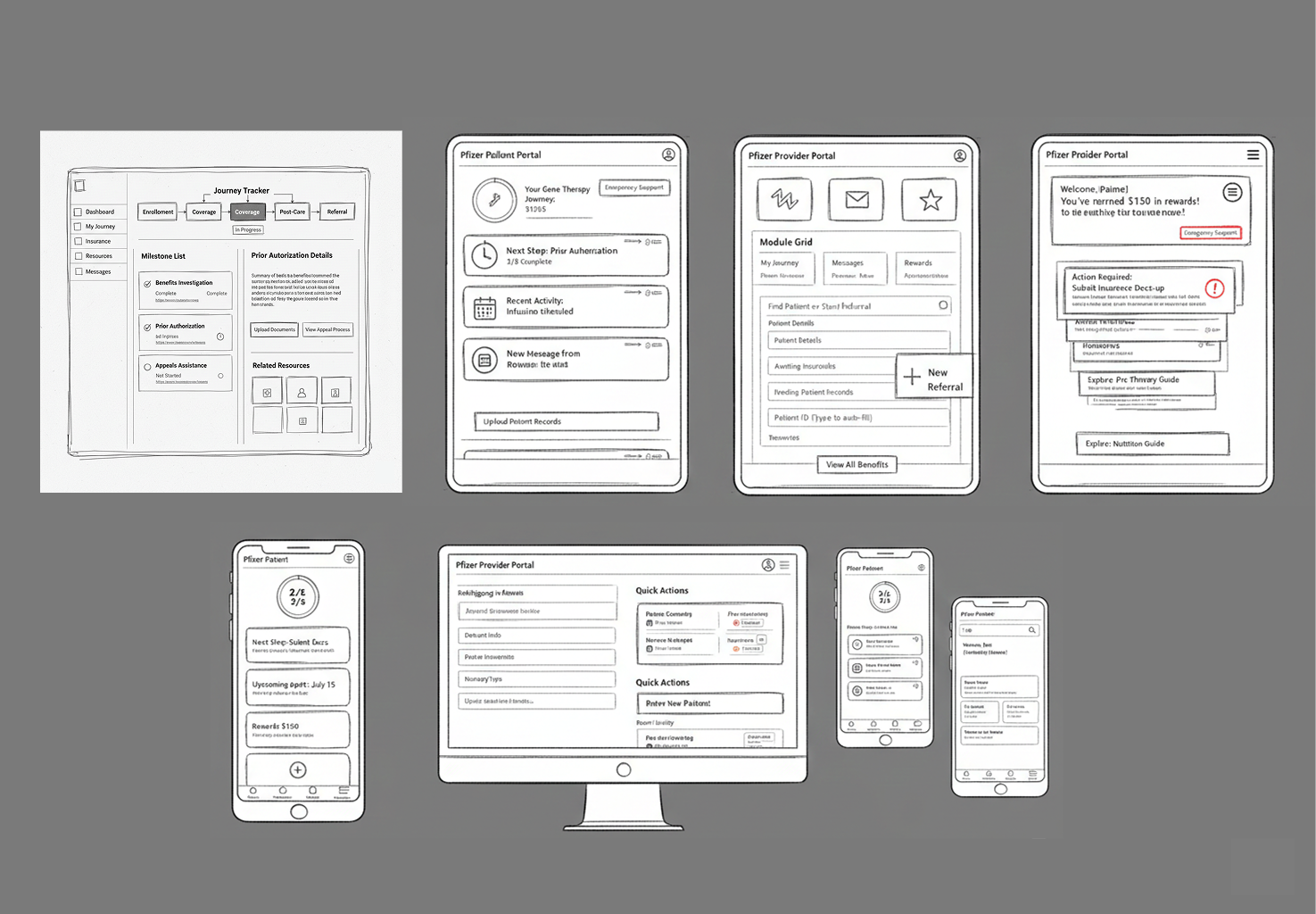
Low-Fidelity Wireframes

Through iterative wireframing sessions, I explored multiple layout options and navigation patterns. These wireframes focused on content hierarchy, user flow, and key interaction points for both patient and HCP portals.

Low-Fidelity Wireframes

Key Wireframing Decisions

  • Dashboard first approach showing treatment timeline and next steps
  • Prominent insurance assistance section for quick access
  • Clear call-to-actions throughout the patient journey
  • Responsive design ensuring mobile accessibility

Usability Testing

Interactive prototypes were tested with patients of varying ages and abilities, as well as healthcare professionals. Multiple rounds of usability testing helped refine the interface for maximum usability.

3

rounds of usability testing conducted

24

participants across patient and HCP groups

35

design iterations based on feedback

Before vs. After: A Turning Point

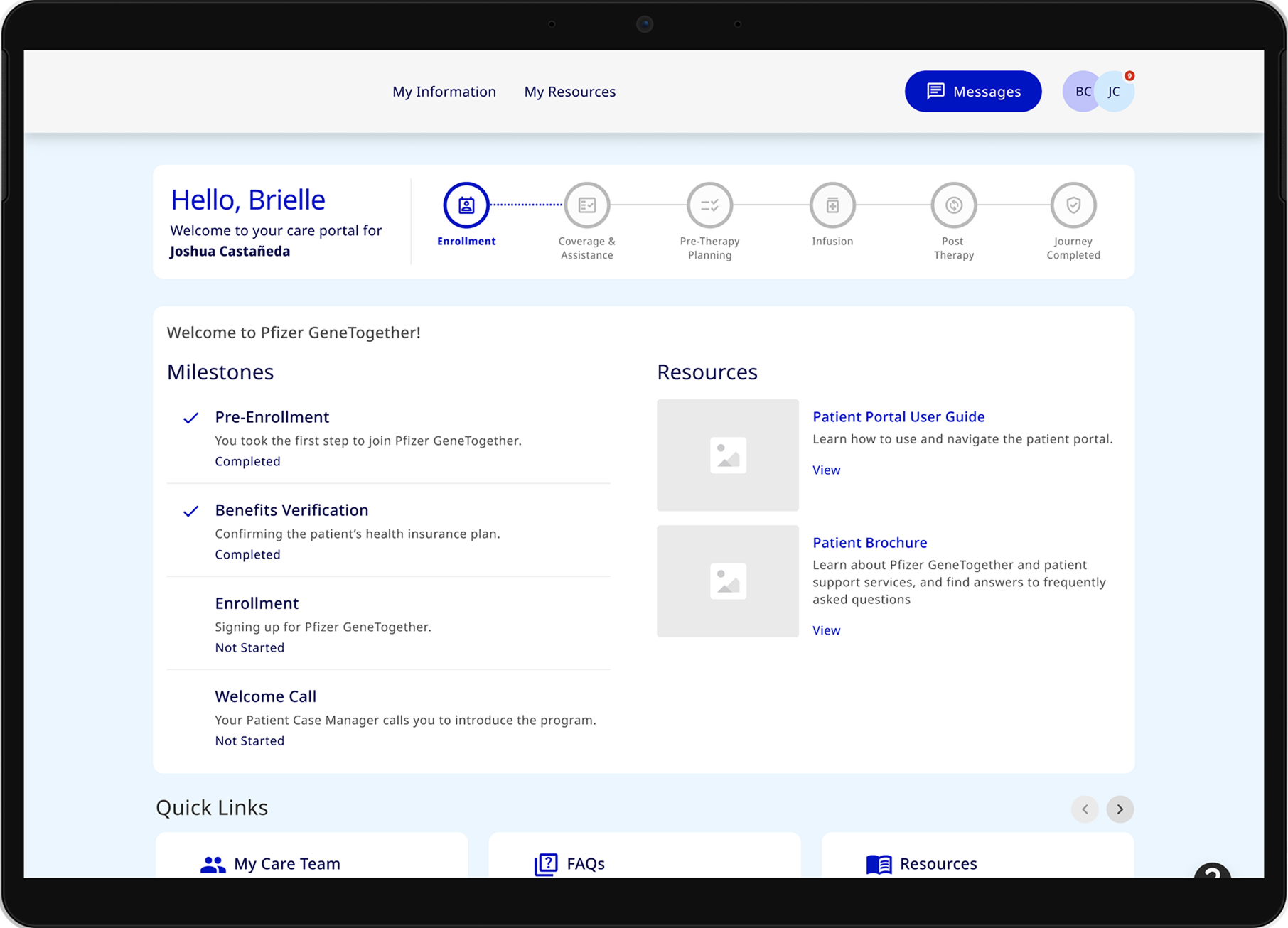
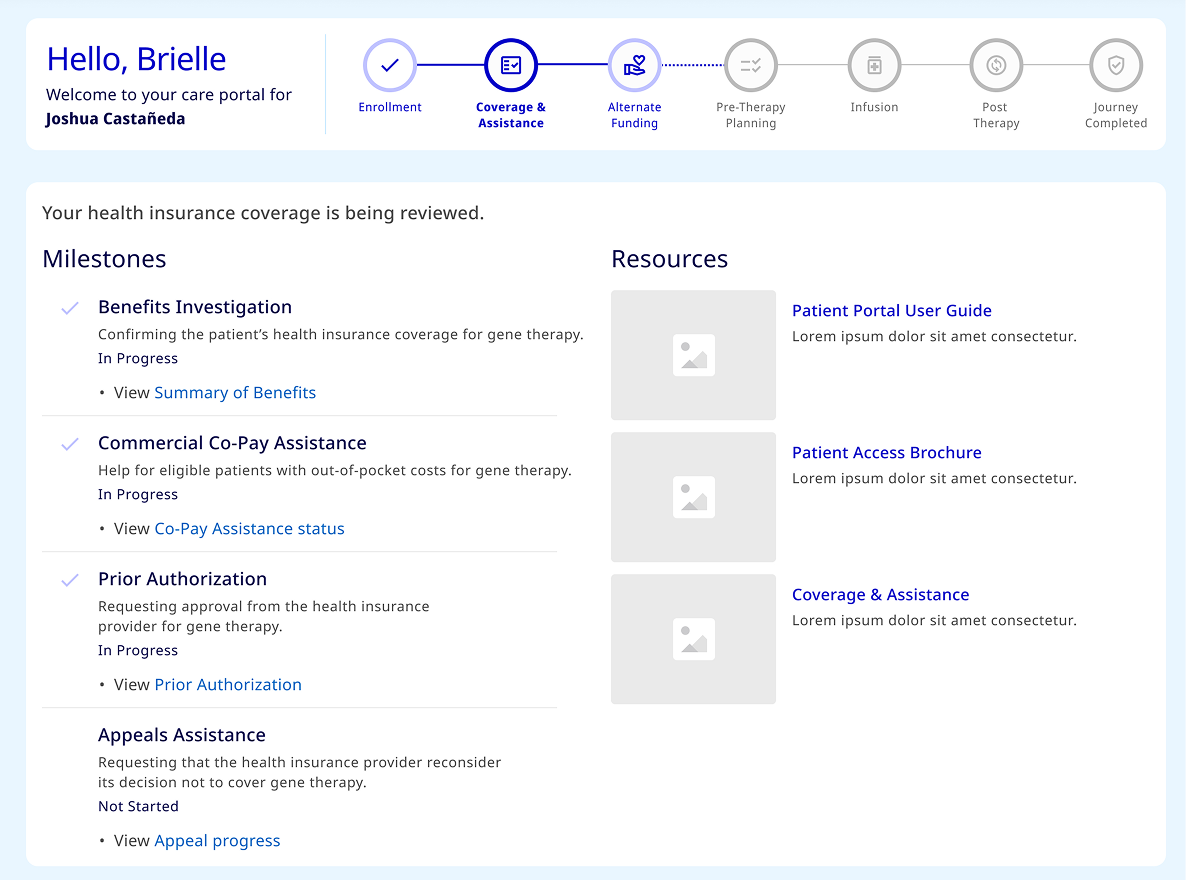
I want to highlight a specific turning point in the project regarding the Coverage & Assistance screen. This is the version I finalized after our second round of user testing.

Before

Initially, we had a standard, linear progress bar and a simple 'Under Review' status. During testing, patients told us this was their 'darkest hour.' They felt like their treatment was in a 'black hole' because they couldn't see the specific hurdles remaining.

After

Based on user feedback, I overhauled the layout to move from 'Status' to 'Transparency':

After - Coverage & Assistance Screen with Granular Milestones
  • Granular Milestones: Broke down the single 'Under Review' status into four specific sub-tasks: Benefits Investigation, Co-Pay Assistance, Prior Authorization, and Appeals.
  • Contextual Documentation: Added direct links under each milestone so the information is available exactly when they need it.

The Result

This iteration was the key factor in reducing our abandonment rate by 60% and improving user satisfaction to 4.8/5. It proved that in healthcare, clarity isn't just a design choice—it's a form of patient care.

Key Refinements

  • Simplified insurance claim submission process
  • Increased button sizes and touch targets for better accessibility
  • Added progress indicators to multi-step enrollment forms
  • Enhanced visual hierarchy based on user feedback

Portal Experience

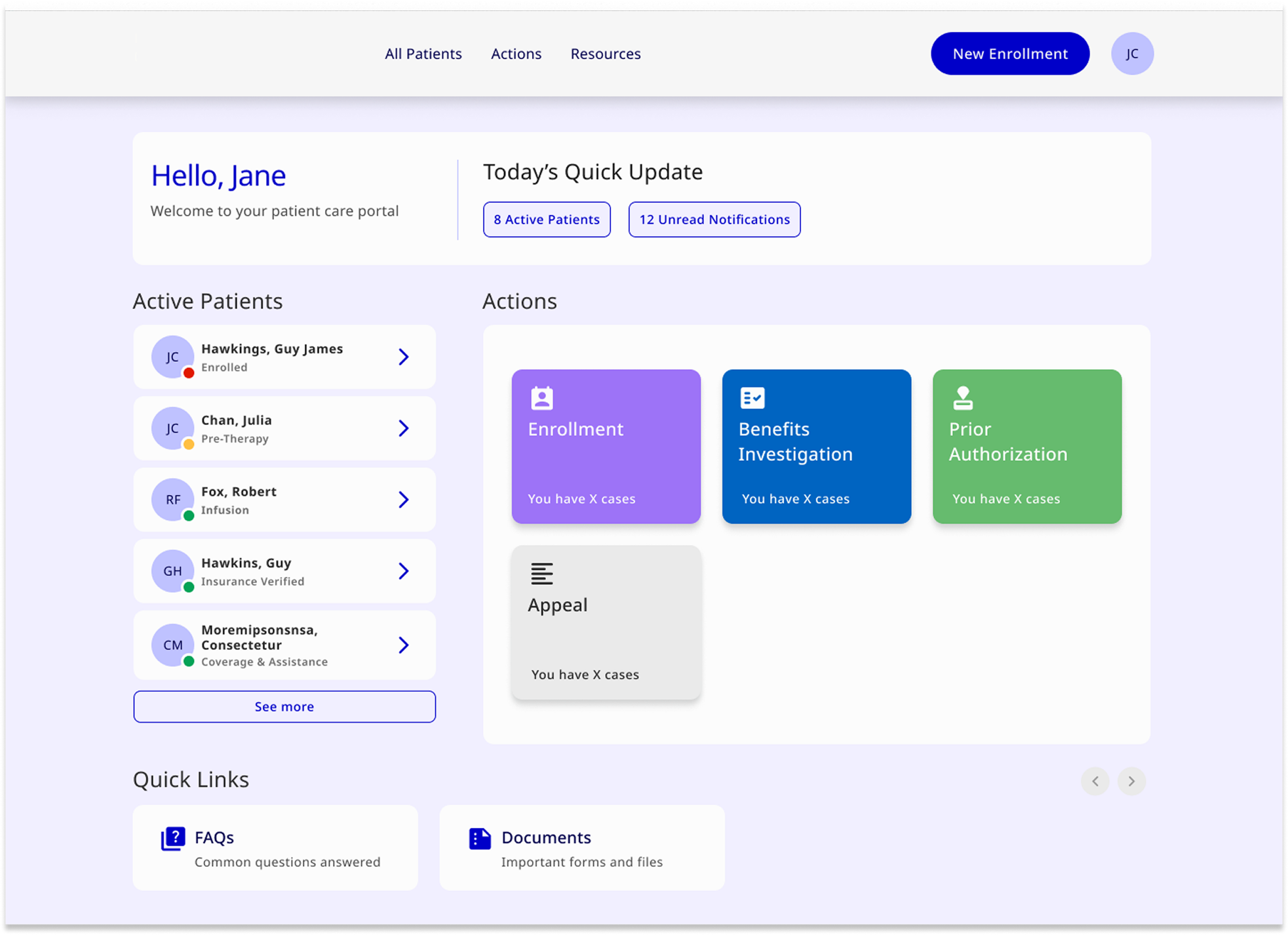
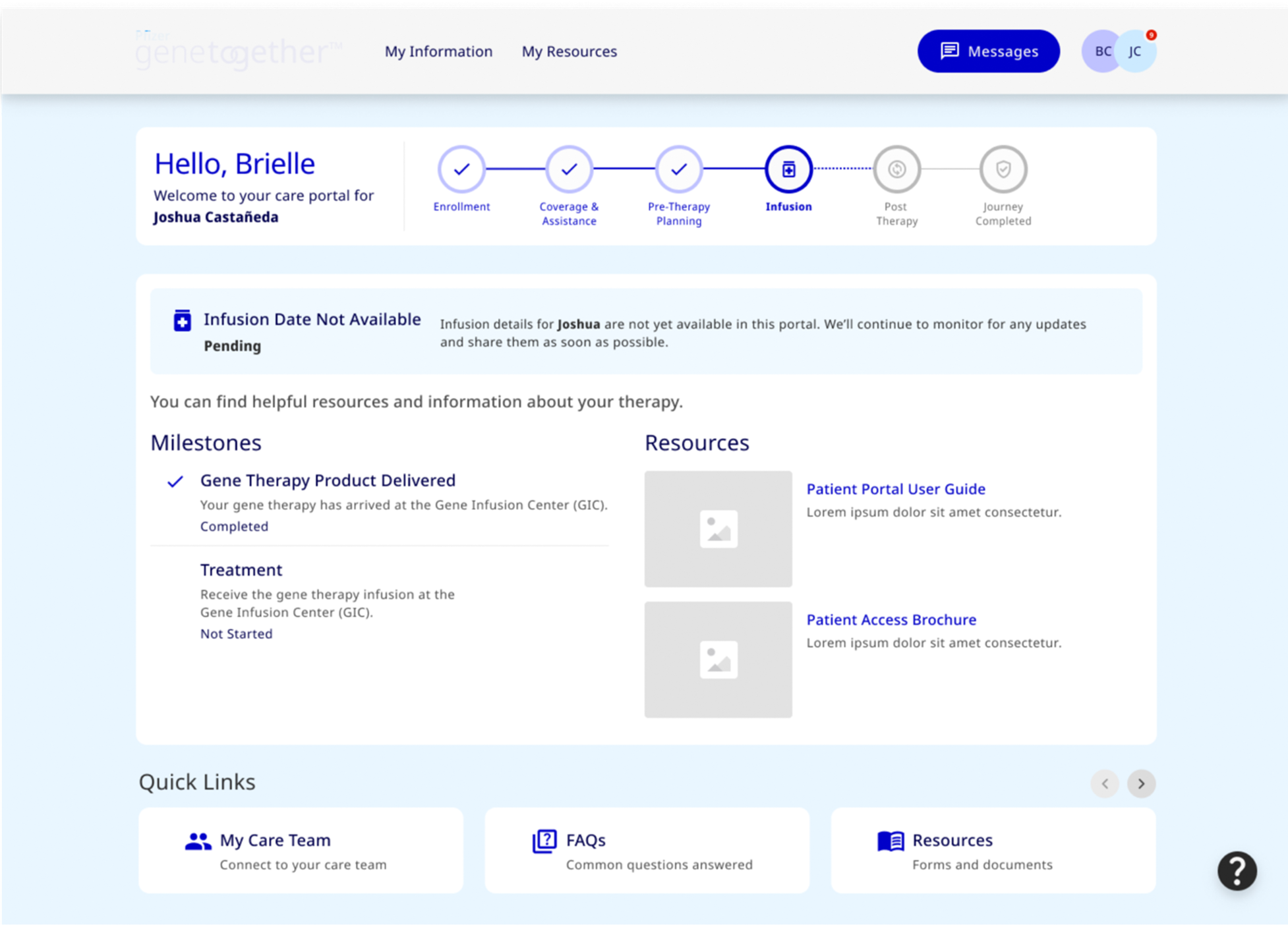
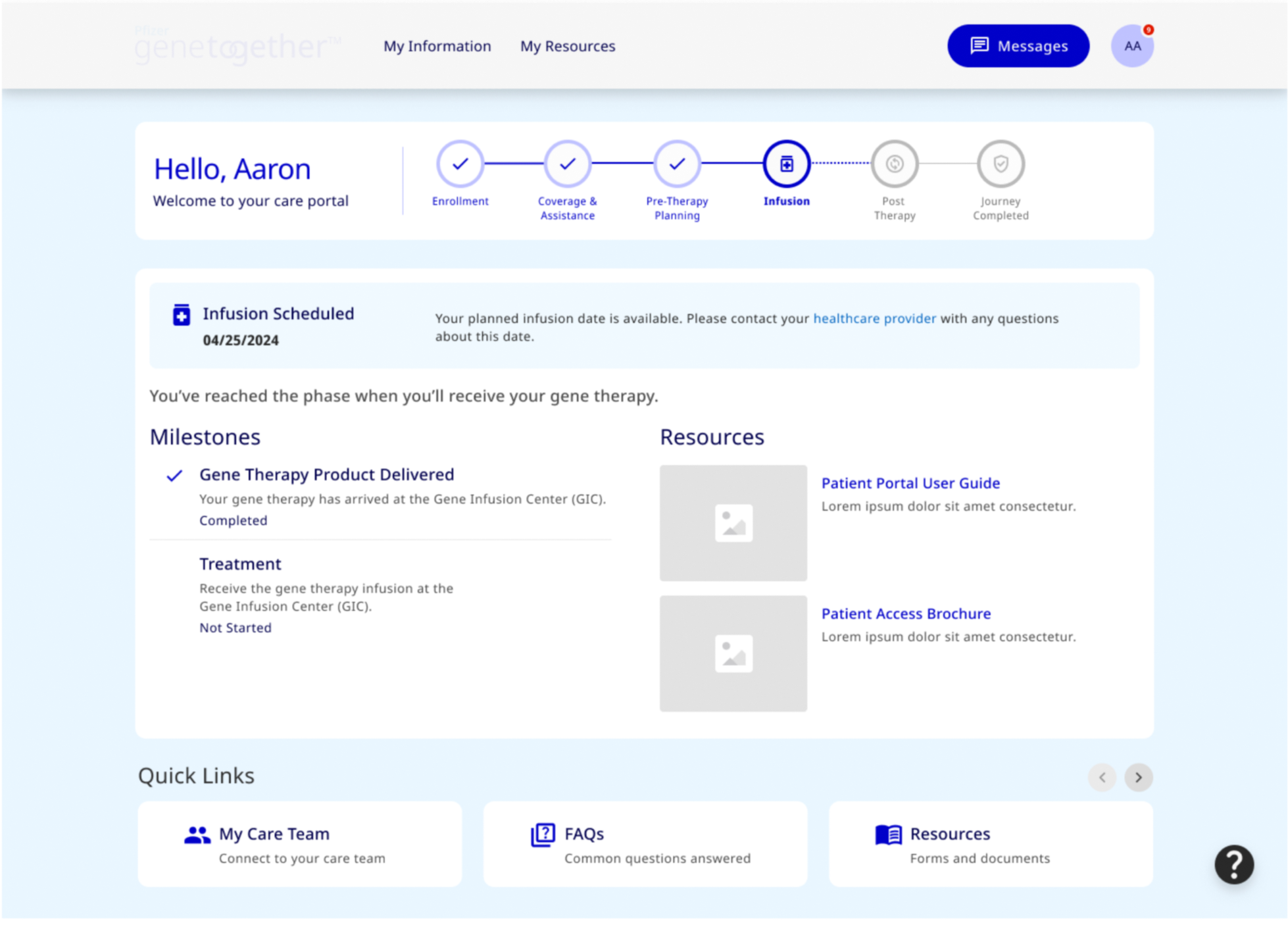
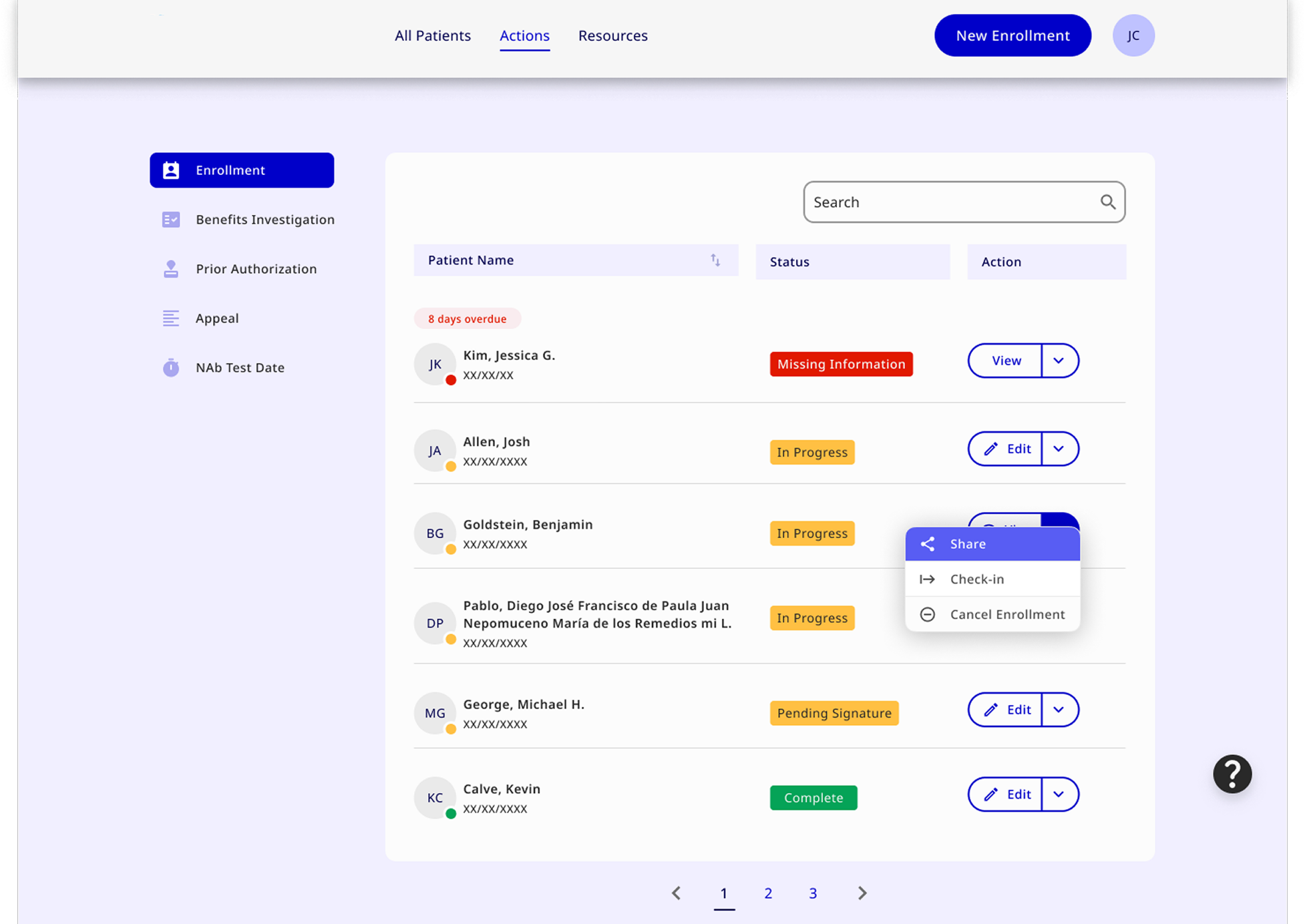
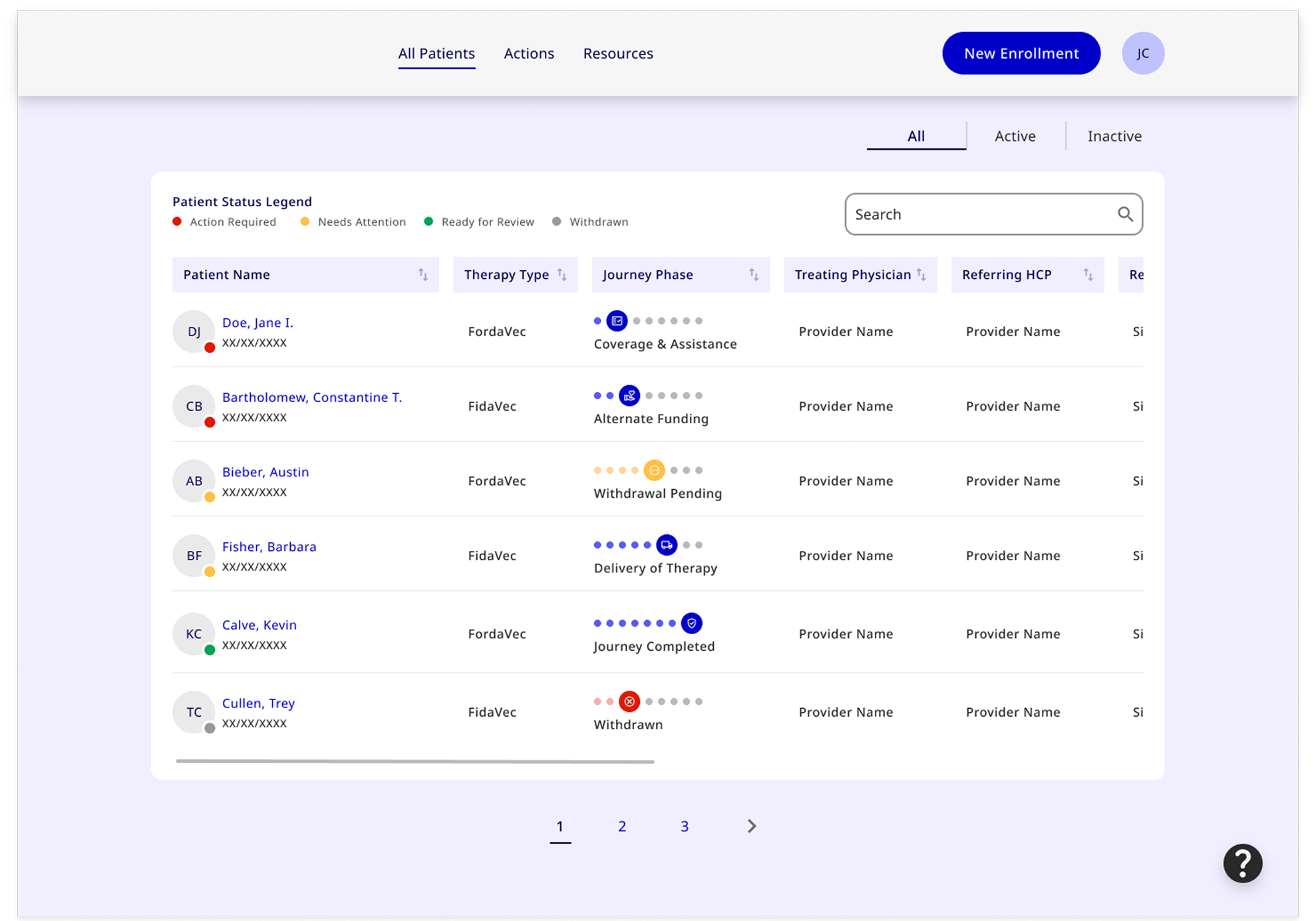
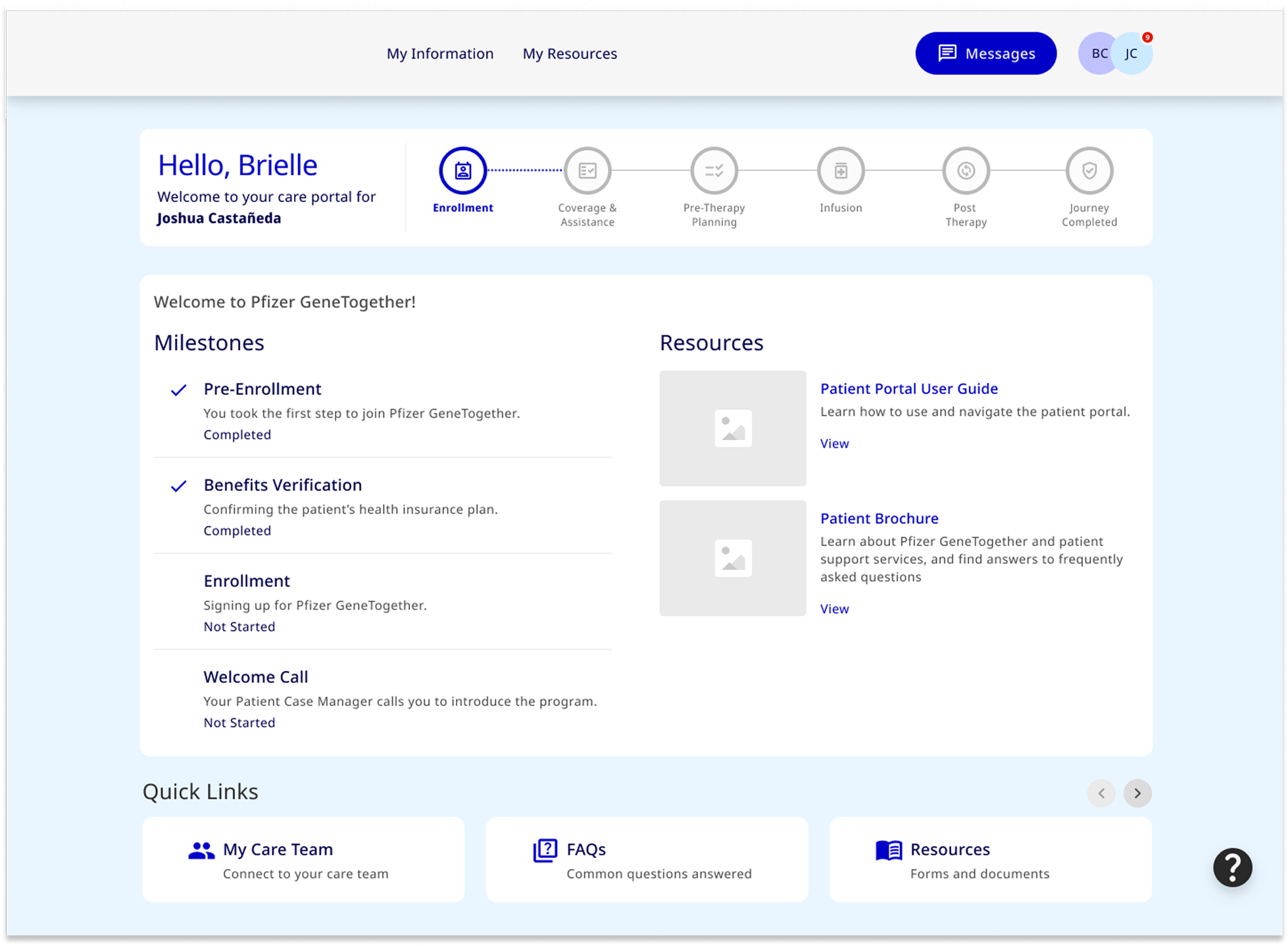
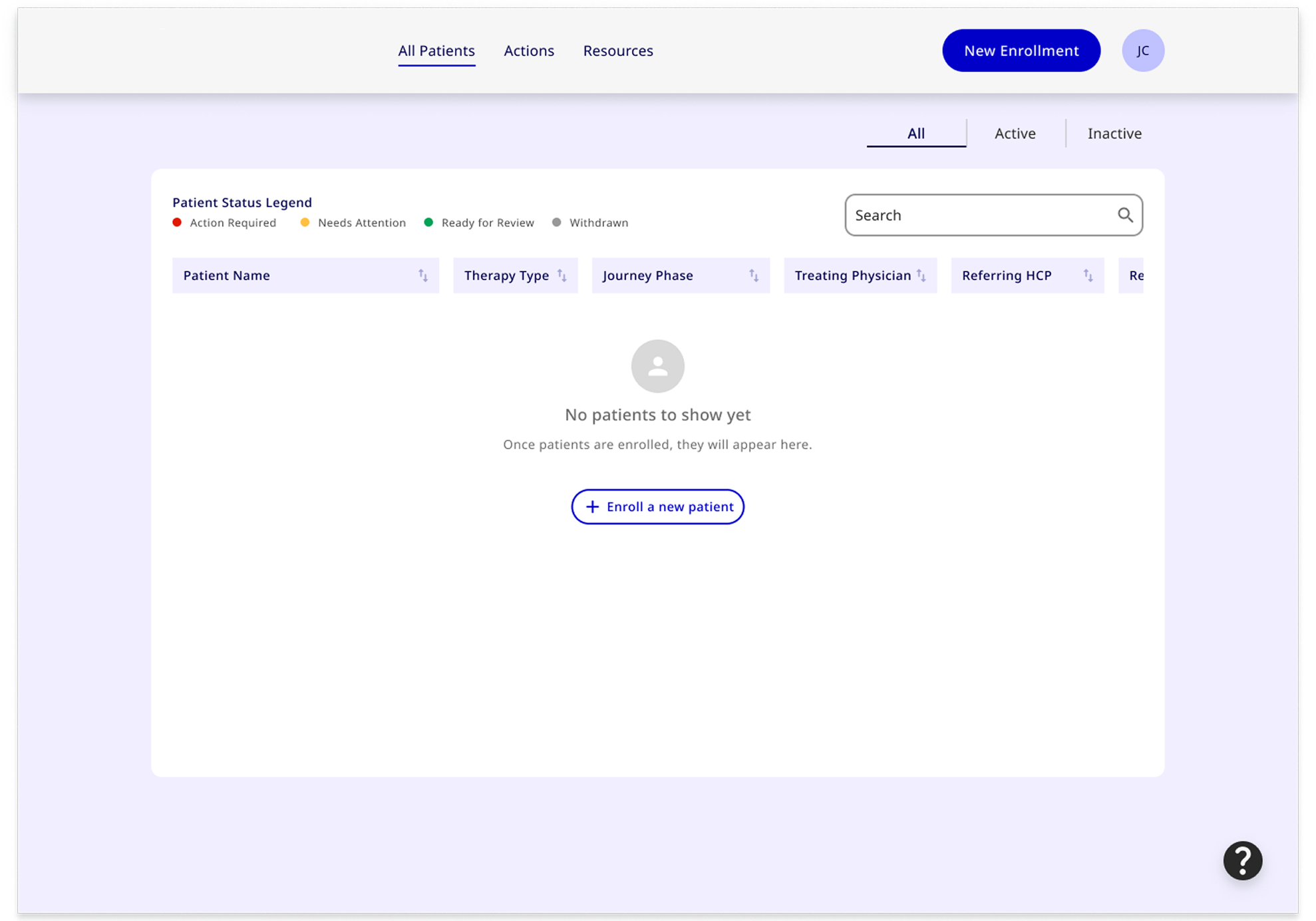
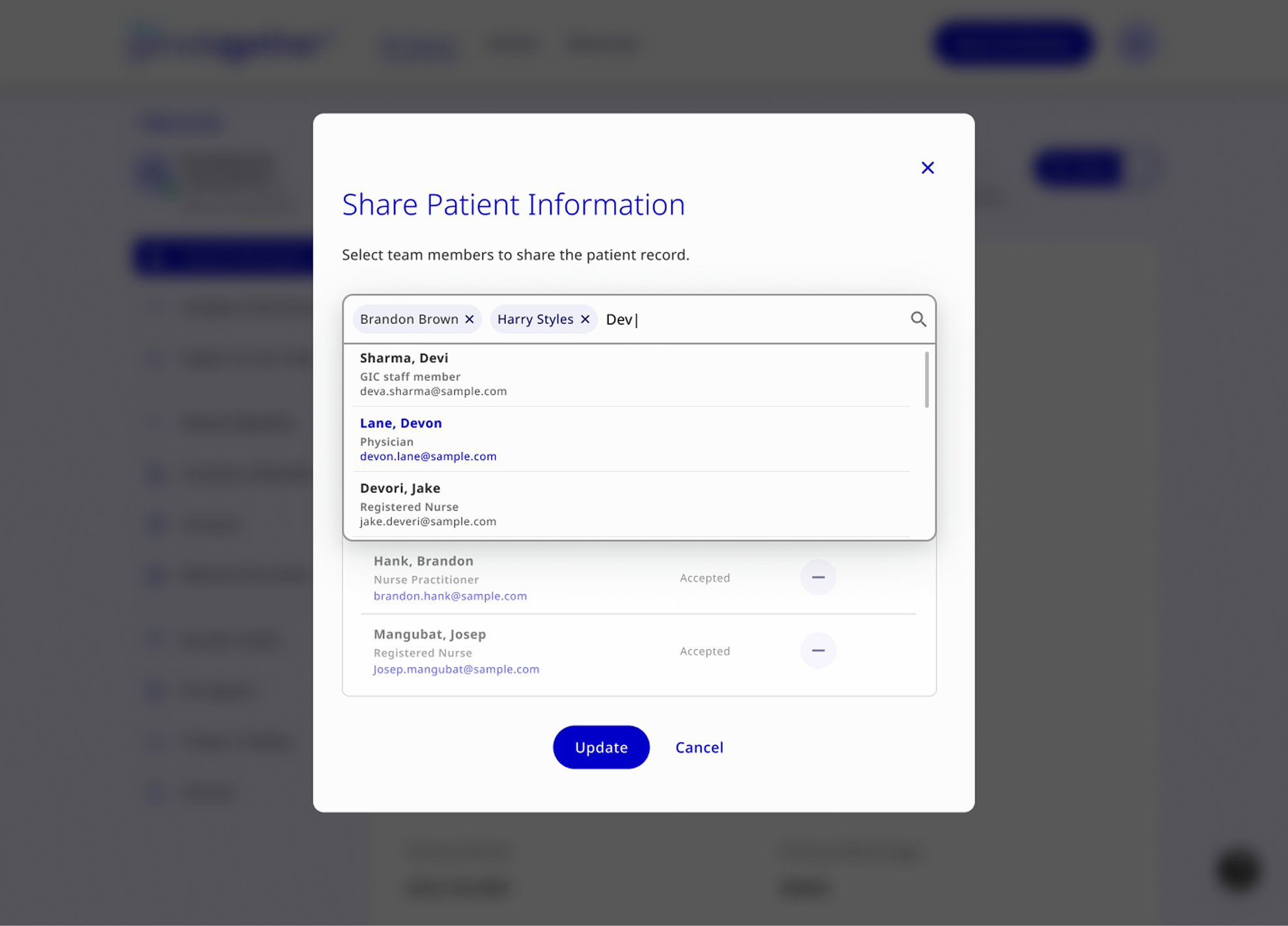
The final design creates a welcoming, trustworthy experience that guides patients and healthcare providers through their gene therapy journey with clarity and confidence.

Final Design - Dashboard
Final Design - Enrollment Final Design - Insurance
Final Design - Treatment Final Design - Follow-up
Final Design - Resources Final Design - HCP Portal
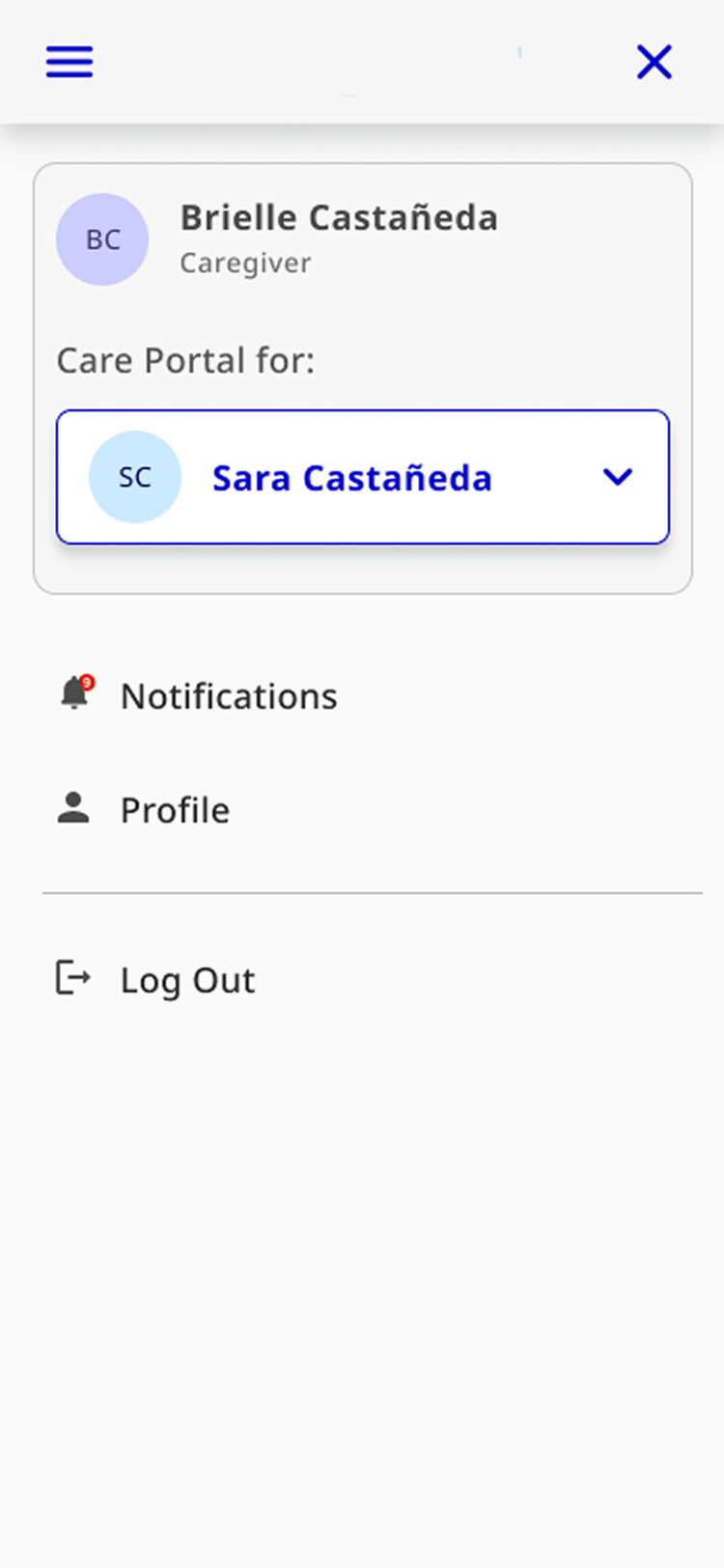
Final Design - Mobile Experience

Mobile Experience

Responsive mobile designs ensure patients can access their treatment information on-the-go.

Mobile Home Screen Mobile Pre-Therapy Screen Mobile Treatment Screen

Measurable Outcomes

60%

Reduction in abandonment rate

AA

WCAG compliance achieved

4.8

User satisfaction score

Additional Impact

  • Task completion rate improved by 35%
  • Support ticket volume decreased by 65%
  • Caregiver adoption increased by 40%
  • Insurance claim submission time reduced by 70%

User Feedback

"The portal has transformed how I manage my treatment journey. Everything I need is just a click away, and the insurance section has saved me countless hours of frustration." - Patient User

Key Learnings

Building this portal from scratch allowed us to prioritize accessibility from day one. The features we implemented for patients with disabilities like clear typography and intuitive navigation improved the experience for everyone.

  • Accessibility first design creates better experiences for all
  • Patient anxiety must be considered in healthcare UX
  • Caregiver needs are often overlooked but crucial
  • Testing with diverse users reveals hidden issues
  • Simplifying insurance processes dramatically improves satisfaction

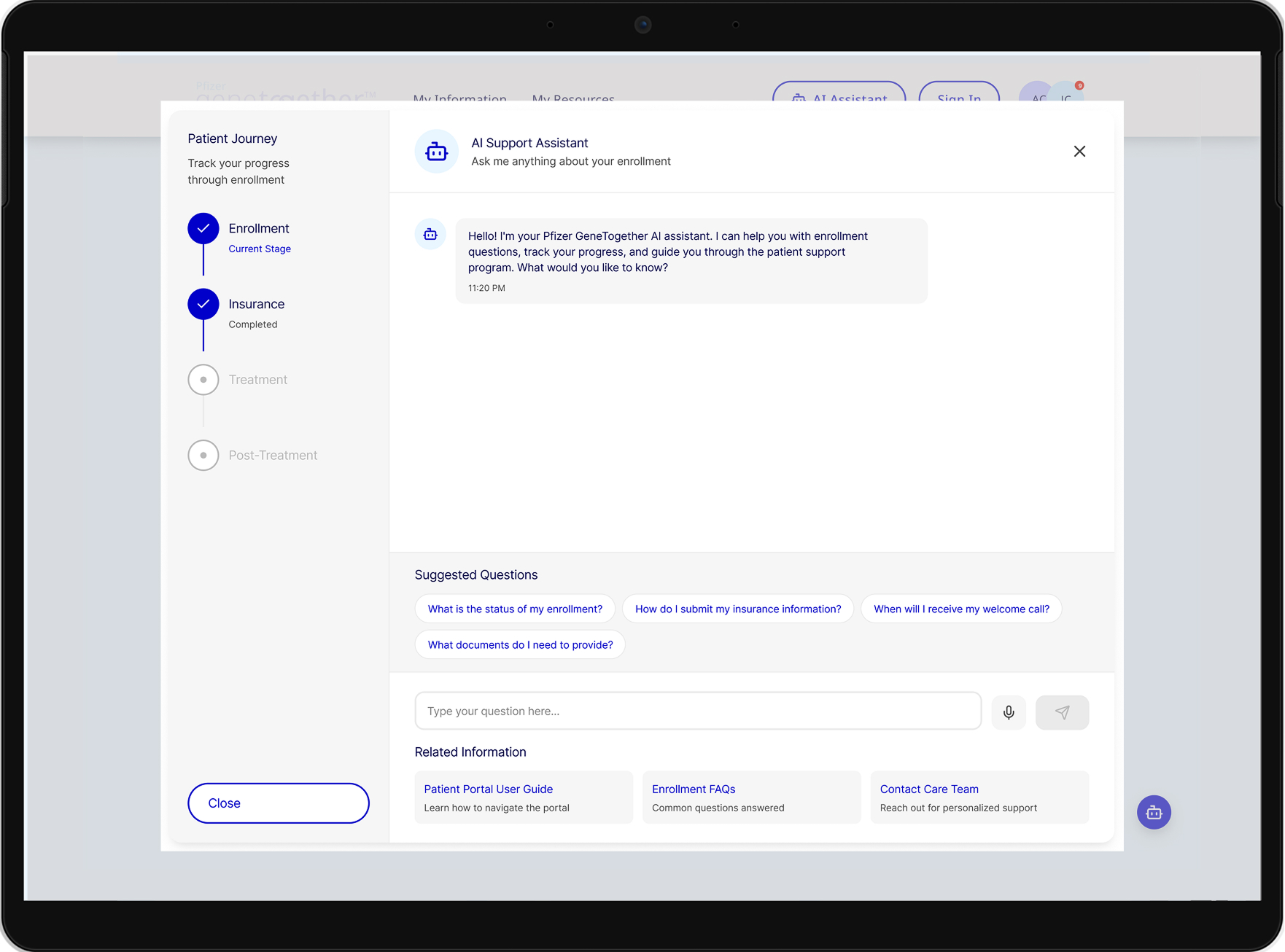
Improving Portal with AI Assistance

Looking ahead, the next evolution of the GeneTogether Portal would integrate a conversational AI assistant directly into the platform.

The "Pfizer GeneTogether AI Assistant" would provide patients with on-demand, personalized support answering questions about enrollment, guiding them through each milestone, and suggesting relevant resources.

AI Chatbot Assistant Concept

AI Assistant Benefits

Interactive & Empowering

Make the portal more interactive and empowering for patients navigating their treatment journey

Reduced Administrative Load

Handle common inquiries automatically, freeing up staff for complex cases

24/7 Support

Offer round the clock, context aware support to enhance the overall patient experience

Personalized Guidance

Provide tailored recommendations based on each patient's unique treatment journey

Next Project

Wellness Dashboard